HISTORY
History of Pau
From the château and the rulers of Béarn to the winter visitors and the first flights at Pont-Long.
Follow Pau from the defensive spur above the Gave to the winter resort and the flying field at Pont-Long.
 The Château de Pau seen from the park. Ineremhat, Wikimedia Commons, CC BY-SA 3.0.
The early town
Pau grew around a defensive spur above the Gave. The château occupied the high ground, while the Hédas cut through the town below. You can still see how that terrain shaped the town from the château bridge and from the bottom of the ravine. Where did Pau get its name? Start with the earliest written mention, the first fort and the ground beneath the château. Then follow the former stream through the Hédas.
From Béarn to the wider world
Marguerite de Valois and Henri of Navarre stayed at the château in 1579. Her account of the chapel gives a glimpse of what it was like to stay there.
Read Jeanne d’Albret’s story
Read Henri IV’s story
Discover historic Pau for a broader view of the city. Bernadotte’s story follows a boy from rue Tran who became king of Sweden and Norway.
Read how Béarn and Lower Navarre joined the French Crown in 1620
Read about Pau in the French Revolution
Find the former Parliament of Navarre
Winter visitors and early flight
Alexander Taylor and Pau’s winter visitors takes you back to the resort before the railway. The Wright brothers at Pont-Long follows Wilbur’s work training pilots in 1909.
Pau through the centuries
Medieval Pau. The city’s chronology records a written mention in 1100 and a court meeting in 1188. The château later became the principal seat of Béarn’s rulers. The sources give different dates for that move.
1553–1620. The future Henri IV was born at the château. His mother Jeanne d’Albret backed the Reformation in Béarn. In 1620 Louis XIII’s edict of union created the Parliament of Navarre at Pau.
1789–1790. Pau renounced the Fors de Béarn, its historic laws and privileges. The Parliament was dissolved in 1790, the year Pau became the capital of the new département of Basses-Pyrénées.
1842–1909. Taylor’s book on the climate appeared in 1842, the railway arrived in 1863 and the funicular opened in 1908. Wilbur Wright trained pilots at Pont-Long in 1909.
The twentieth century. The street Grand Prix began in 1933. The discovery of gas at Lacq in 1951 brought a new industry to Béarn.
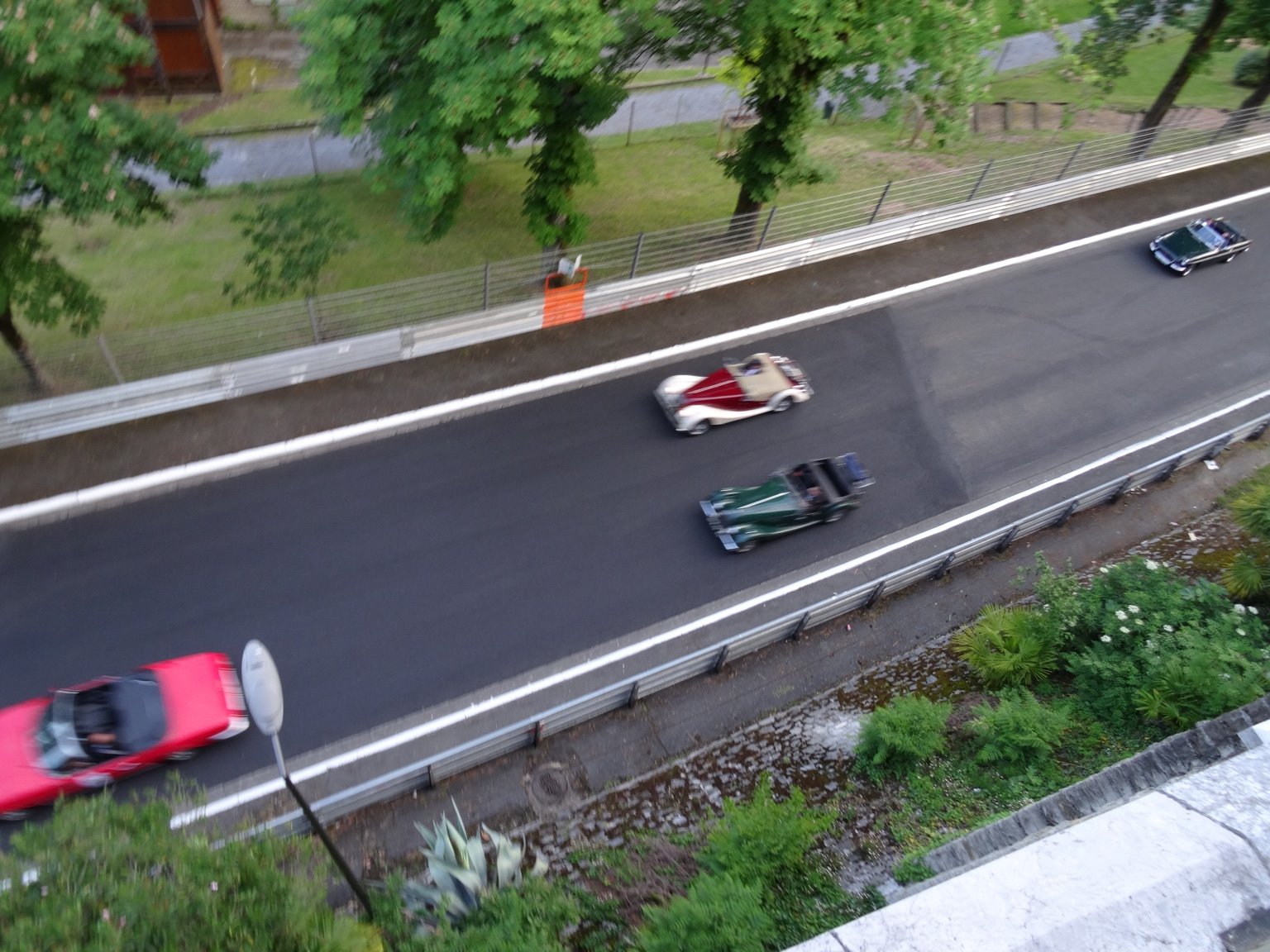 A view from above the street circuit.
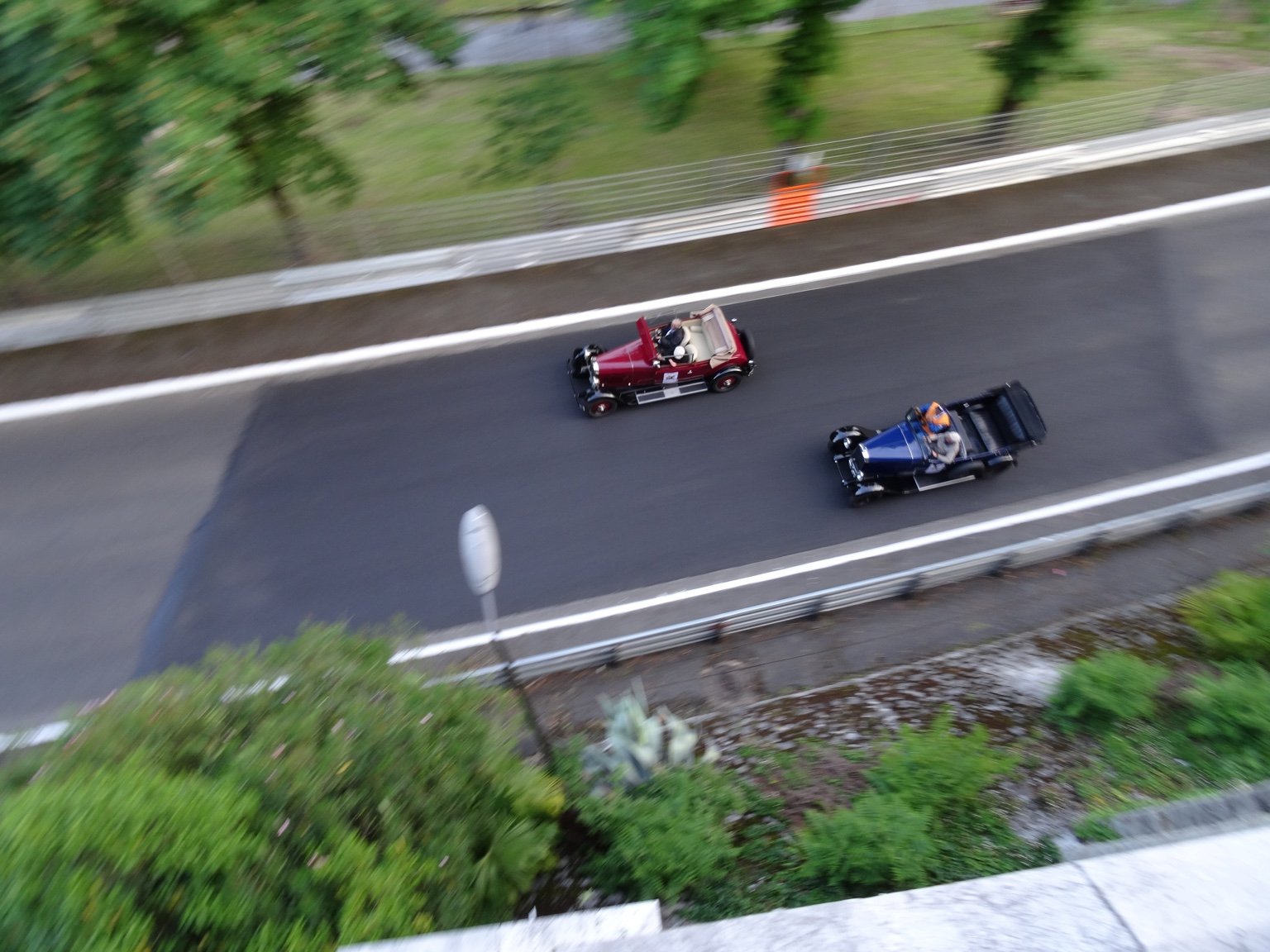 Two cars pass on Pau’s city streets.
Further reading on Pau
The historian Pierre Tucoo-Chala wrote Pau, ville anglaise and Pau, ville américaine. Start here for the British winter community and the American visitors, including Ulysses S. Grant and Mary Todd Lincoln.
André Labarrère, a former mayor of Pau, wrote Pau, ville jardin (Arthaud, 1983) and supplied the text for Pau, ville des lumières. His novel Le bal des célibataires is a fictional portrait of the resort’s social world.
Résumé en français
Découvrez les origines de Pau, le château et le Hédas, puis suivez les histoires de Bernadotte, des hivernants et des frères Wright.
Explore the walks
Gaston Fébus · Pau and Spain