HISTORY OF PAU
Château de Pau
A defensive site above the Gave de Pau and the birthplace of Henri IV.
Before you look at the towers, look at the ground. The château stands on a spur above the Gave de Pau, with the Hédas ravine on the other side. From here you can see why this spot lent itself to defence.
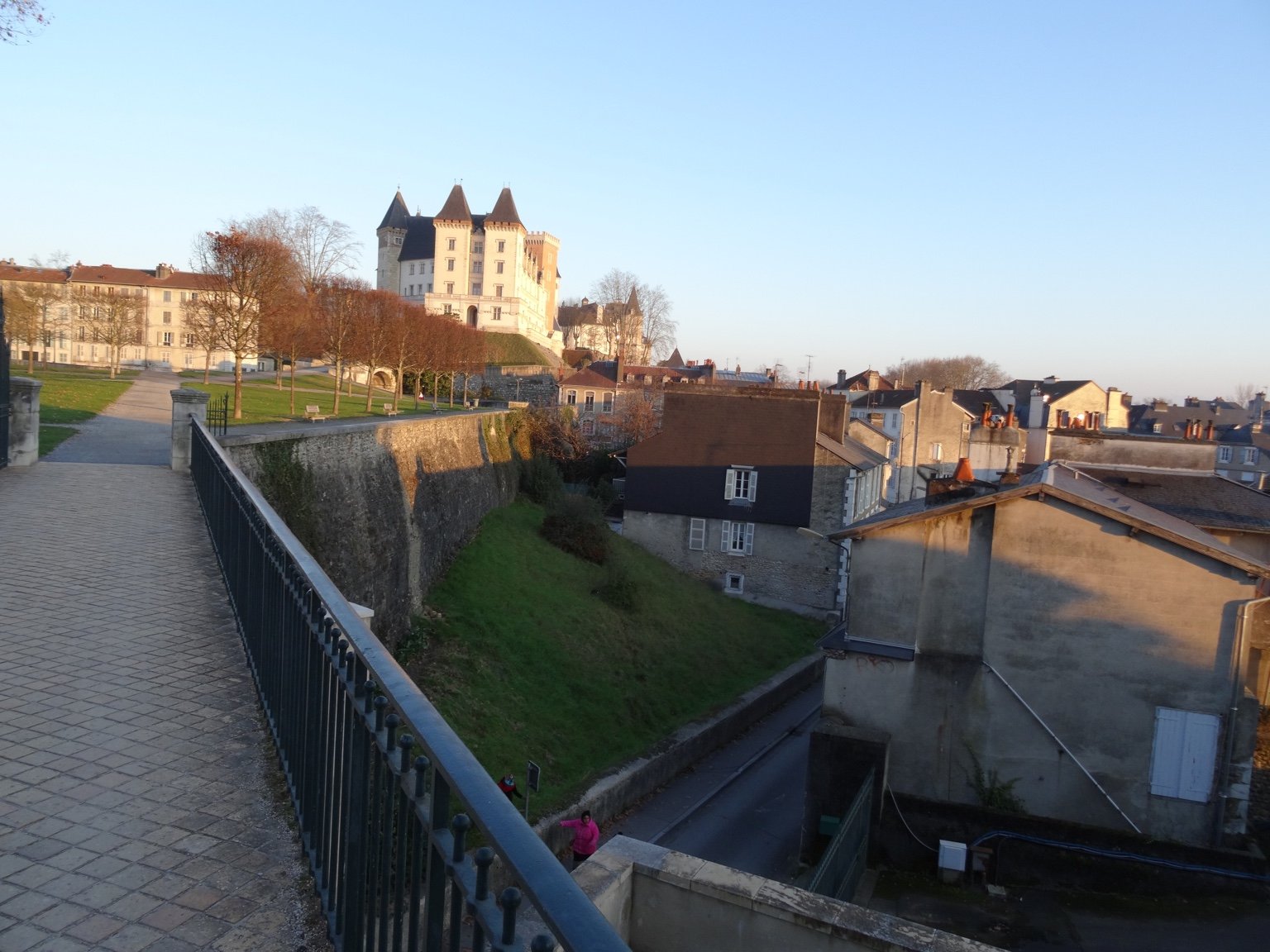 The château from the bridge.
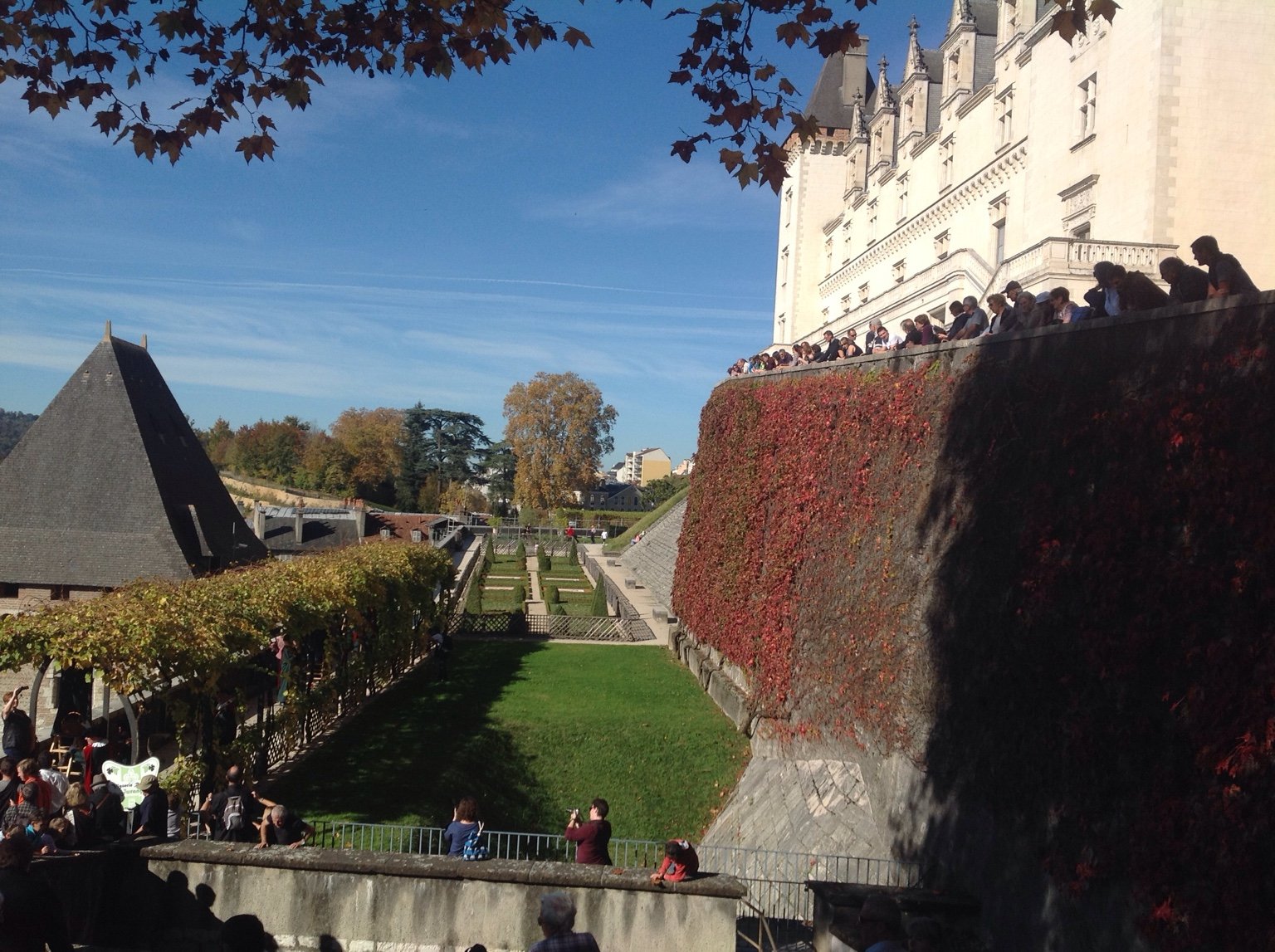 The gardens beneath the château walls.
From a fort to a royal birthplace
The city’s heritage chronology records a written mention of Pau in 1100. The early fort’s date is less certain. The château became a seat of the rulers of Béarn, and the future Henri IV was born here in December 1553.
In 1579, Henri of Navarre and his wife Marguerite de Valois stayed at the château. Her memoirs recall a chapel so cramped that a handful of people could fill it. Read their story and what Marguerite remembered of Pau.
What to look for
Take in the walls and the slope below them before heading into rue du Château. When you cross the bridge towards town, look for the basset-hound door knocker at Hôtel de Peyré, at 2 rue du Château. The old-town walk shows the doorway and tells the story of the passage said to have linked the two buildings. If you’re planning to visit the museum, check its opening hours before setting out.
The Tour de la Monnaie and the old mint
Look for the tower below the château at Place de la Monnaie. The square takes its name from the old mint in the tower, formerly called the Tour du Moulin. Under Henri d’Albret, Jeanne d’Albret’s father, the workshop was equipped with water-powered machinery to strike coins. One surviving example is a gold écu struck in 1564 with Jeanne’s coat of arms.
See Jeanne d’Albret’s gold écu in the château museum collection.
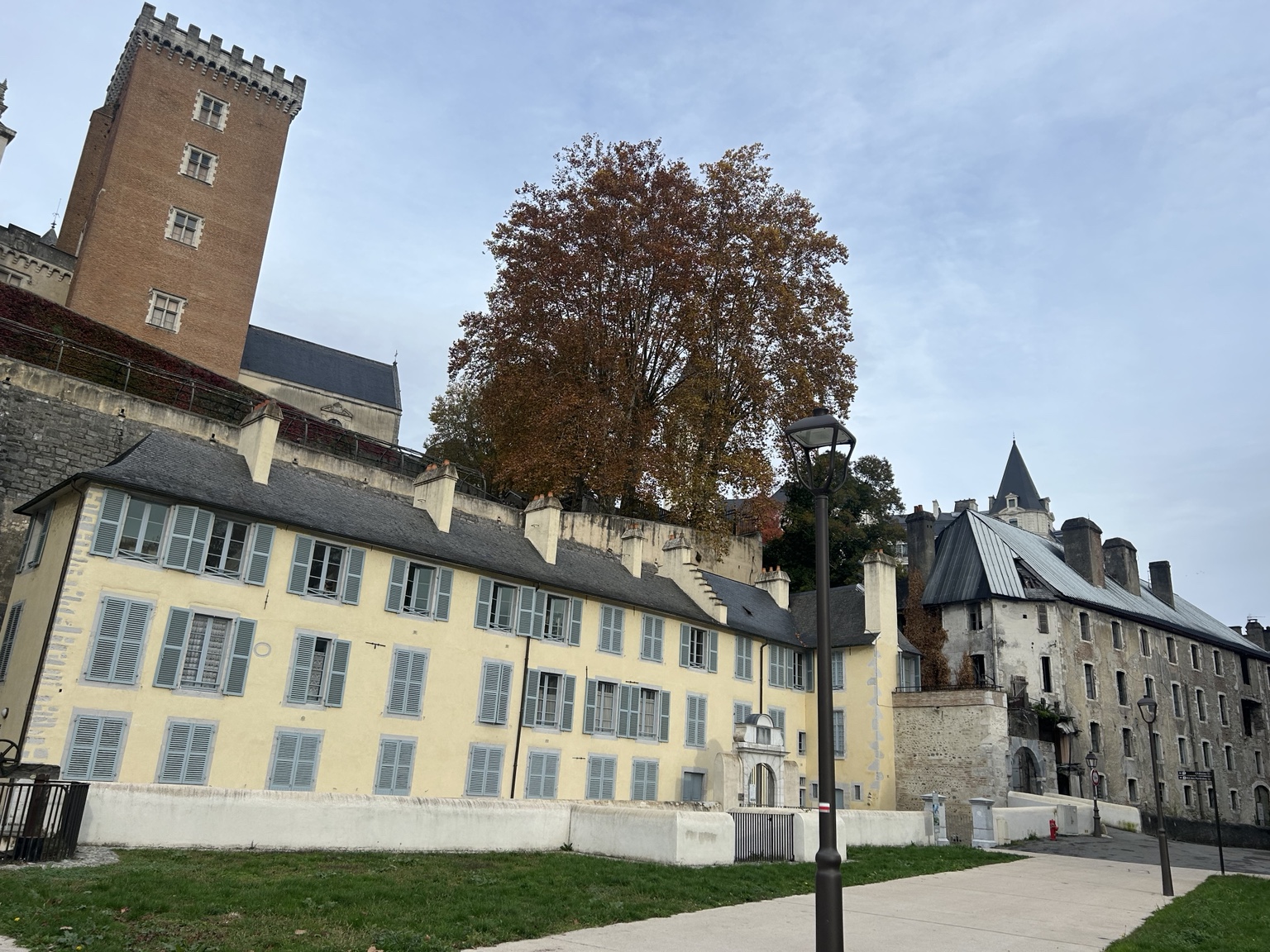 Looking up towards the Château de Pau from Place de la Monnaie.
Résumé en français
Le château occupe un éperon entre le gave de Pau et le ravin du Hédas. Observez le relief avant de regarder les tours. La première mention écrite de Pau remonte à 1100 selon la chronologie de la ville. La date de la première fortification reste incertaine. En revenant vers la ville, repérez le heurtoir en forme de basset au 2 rue du Château. Notre promenade dans le vieux Pau vous fait découvrir l’ancien hôtel de Peyré.
Back to the old Pau walk
Read the story of Pau’s name
Gaston Fébus and the brick keep