WALKS IN PAU
What to look for in Pau’s historic quarter
Door knockers, old postcards and street details to spot as you explore.
Before you start
Suggested route: Start at the main gate of the Château de Pau, follow rue Henri IV past Saint-Martin and finish at Place Royale. Allow about 30 minutes at an easy pace for this outing. Distance to be measured. The sights below can also be visited in any order.
Toilets and cafés: Look for cafés around Place Royale. Public toilet locations are awaiting confirmation.
Open walking directions in Google Maps.
Access: The Hédas is below street level. Check the lifts if you plan to visit it separately.
On your walks through Pau’s historic quarter, look out for these details. Pick whichever places are near you.
Print the lookout list
The château and the basset-hound door knocker
Look for the dog on the door. Across from the château bridge, at 2 rue du Château, the former Hôtel de Peyré (also called Hôtel de Sully) has a door knocker shaped like a basset hound. Behind the doorway are a pebble-paved entrance hall and a monumental staircase, both protected as historic features since 1987. The French heritage record also mentions a local tradition of a passage to the château. Works in the courtyard uncovered steps and the start of a gallery, but where it led remains uncertain.
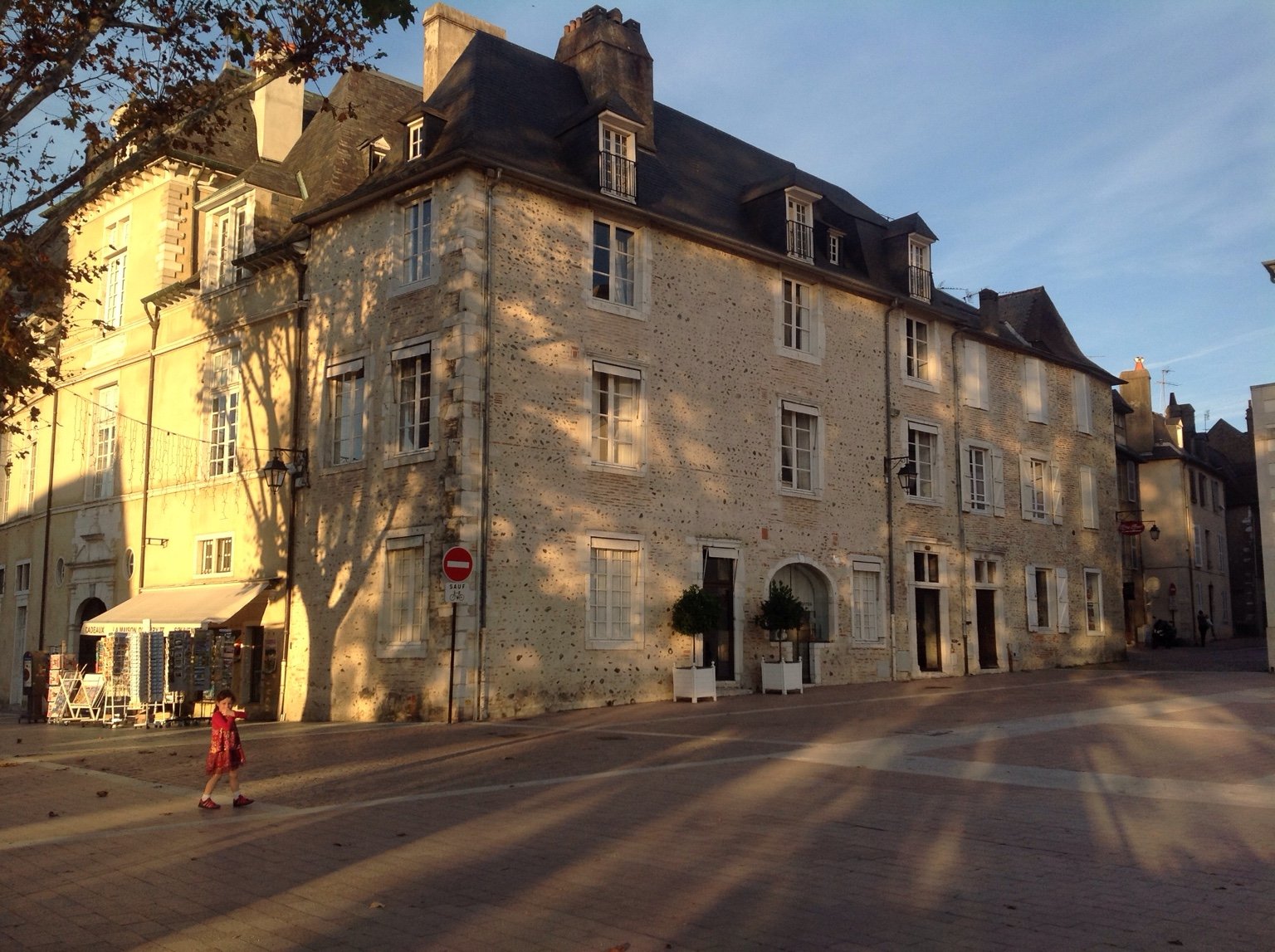 The corner by the souvenir shop. To find the Hôtel de Sully, look for the arched doorway immediately to the left of the shop.
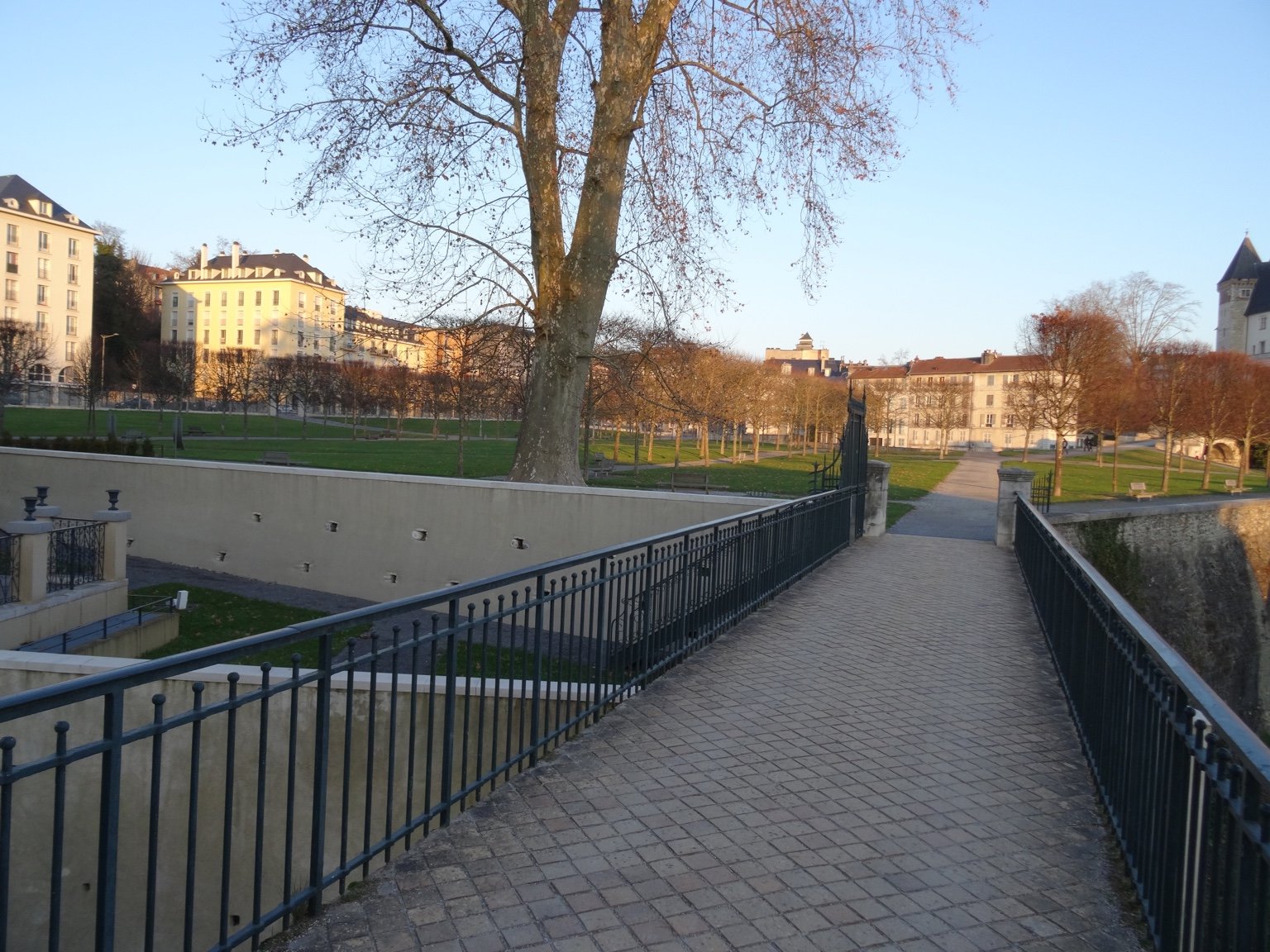 The footpath beside the château grounds.
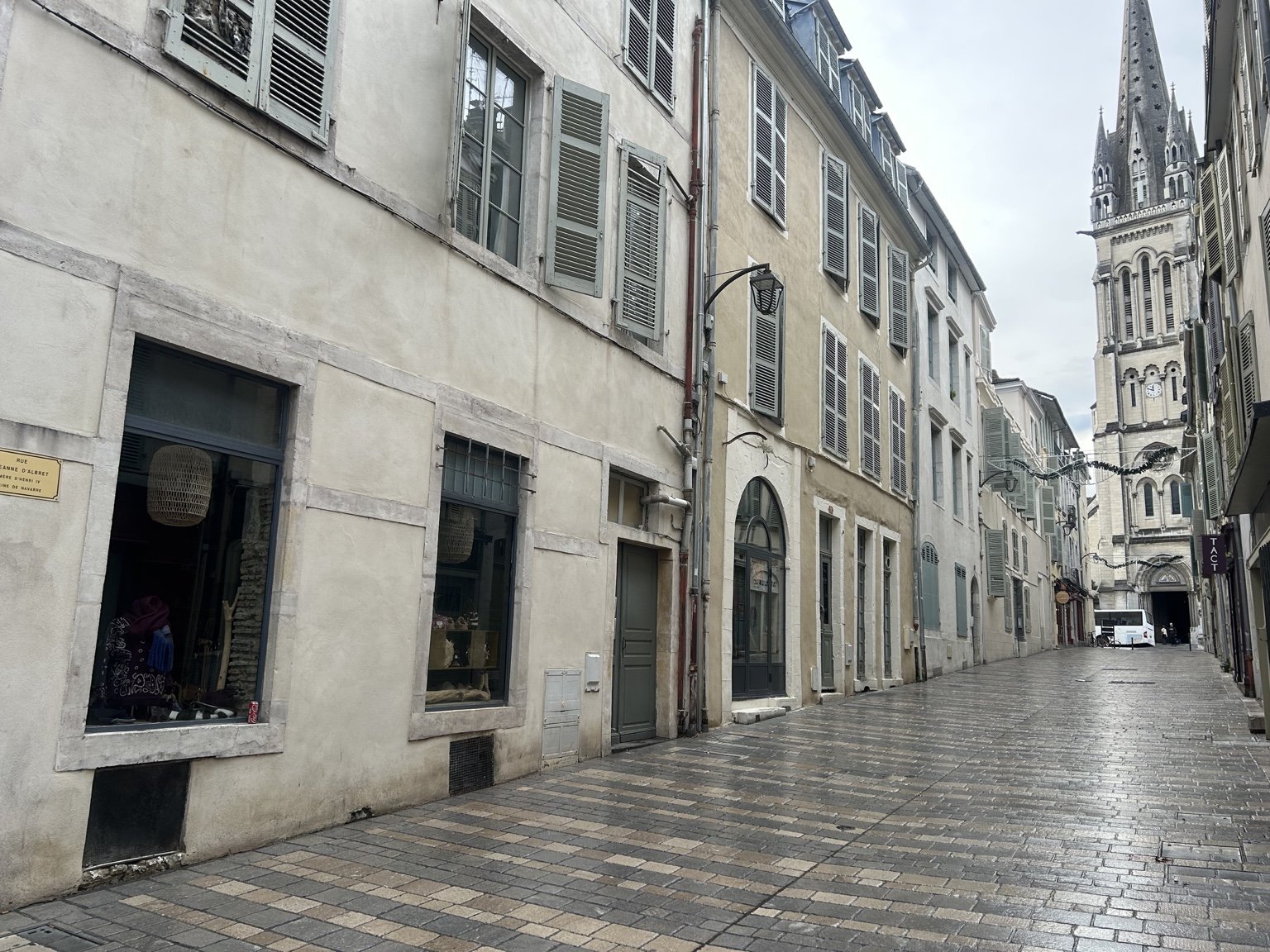 Stone shopfronts along a pedestrian street in the historic quarter.
Rue Jeanne d’Albret, then and now
If you’re heading from the château towards Saint-Martin and Place Royale, follow rue Henri IV. On rue Jeanne d’Albret, face Saint-Martin and use the church spire to line up the two views. Look at the edges of the roofs on either side of the spire. Which ones still frame the street as they did in the postcard?
The arcades of Place Gramont
Place Gramont was laid out in the eighteenth century as one of Pau’s main entrances. In Victor Petit’s view from around 1850, look for the château towers on the left and the long line of arches on the right. The arcades are still there. Walk beneath them and look back across the square.
Explore the Château de Pau
Below the château: Look for the Tour de la Monnaie, the old mint that gave Place de la Monnaie its name.
Also near the château. See the former Parliament of Navarre from Place de la Déportation.
Place de Verdun and the Bernadotte barracks
At Place de Verdun, look across the open square towards the Caserne Bernadotte. In 1773 this area was still part of the Bois de la Plante, a wood crossed by two tree-lined avenues. The barracks took seventeen years to build and were completed in 1842. From the square, follow the line of windows with your eye to get a sense of the scale of the building. Pau’s heritage survey traces that change. A photograph in Pau’s museum collection shows the barracks during the first days of mobilisation in August 1914. Today the building houses the French defence archives’ Pau centre, where military personnel records are kept.
See the 1914 photograph · Pau military archives · Follow the city’s 2 km Haute Plante walk
To see where the man who gave the barracks their name grew up, follow Bernadotte’s Pau from his birthplace in rue Tran.
The Hédas washhouse and fountain
The Hédas lies below the streets of the centre. Look up at the Pont des Cordeliers from below. If steps or steep slopes are a concern, check the Hédas access and lift information before descending.
 The Hédas beneath the Pont des Cordeliers. Flo641, Wikimedia Commons, CC BY-SA 3.0.
Look for the restored washhouse and the Lions Fountain opposite, two reminders of how the neighbourhood used water.
Explore the Hédas
Place Royale and the Boulevard des Pyrénées
On a clear day, stop at one of the boulevard viewpoints and see which peaks you can pick out.
Before you leave Place Royale, look back at the ornate façade of Pau’s hôtel de ville. Then find Henri IV’s statue. Read how Pau unveiled it in 1843, with around 300 singers and musicians performing in the square.
 Pau’s hôtel de ville, Place Royale. Will6475, Wikimedia Commons, CC BY-SA 4.0.
Explore the Boulevard des Pyrénées
The funicular and railway station
From Place Royale, take the funicular down to the Gare de Pau. The ride is free. Check the city’s funicular information before setting out.
At the station, look back up towards the boulevard. The climb from the valley to the hotels around Place Royale explains why the funicular mattered to arriving passengers. To follow that story uphill, start the winter-resort walk at the station.
The Préfecture on rue Joffre
Look up at the rooflines
As you explore, look above the shopfronts. In this view, a steep tiled gable and wooden shutters sit beside a pale façade with iron balconies.
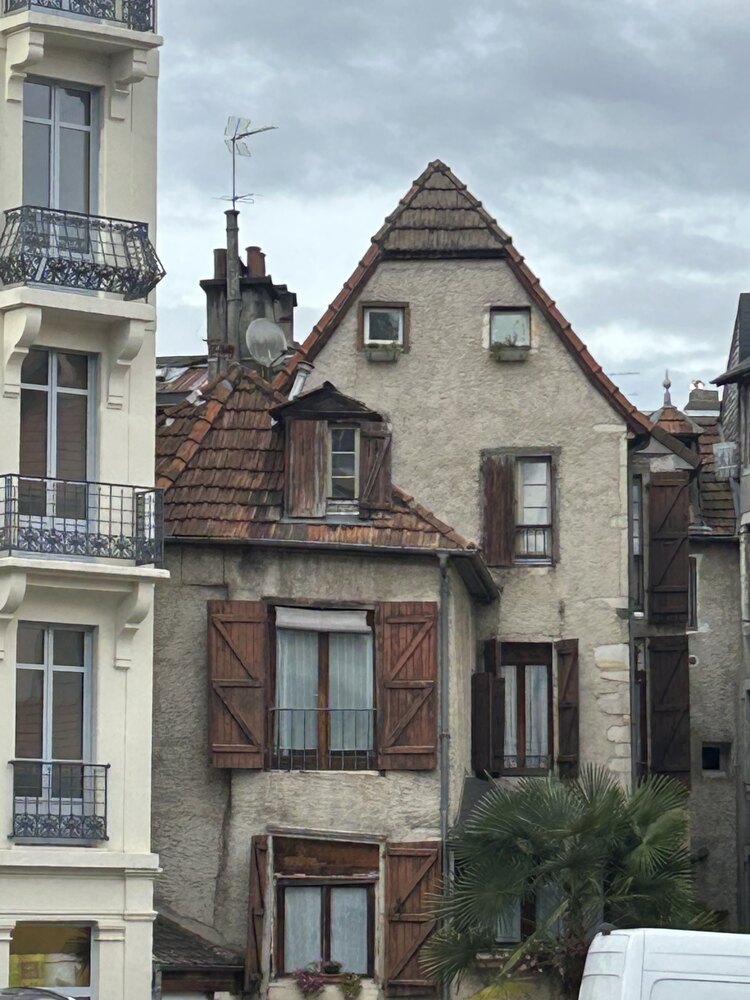 Rooflines and shutters in central Pau.
Résumé en français
Du château, suivez la rue Henri IV vers l’église Saint-Martin et la place Royale. Au numéro 2 de la rue du Château, repérez le heurtoir en forme de basset de l’ancien hôtel de Peyré. Le vestibule pavé de galets et son escalier monumental sont protégés au titre des monuments historiques depuis 1987. Au fil de vos promenades, repérez les arcades de la place Gramont, le lavoir restauré du Hédas et la fontaine des Lions qui lui fait face. Par temps clair, prenez le temps de repérer les sommets.