Pau · Béarn · South-west France
Four stories you can walk through
A king was born here. Mary Todd Lincoln wrote home from here. The Wright brothers flew nearby. Start at the château and see how much of their Pau you can still find.
Start at the château ↓
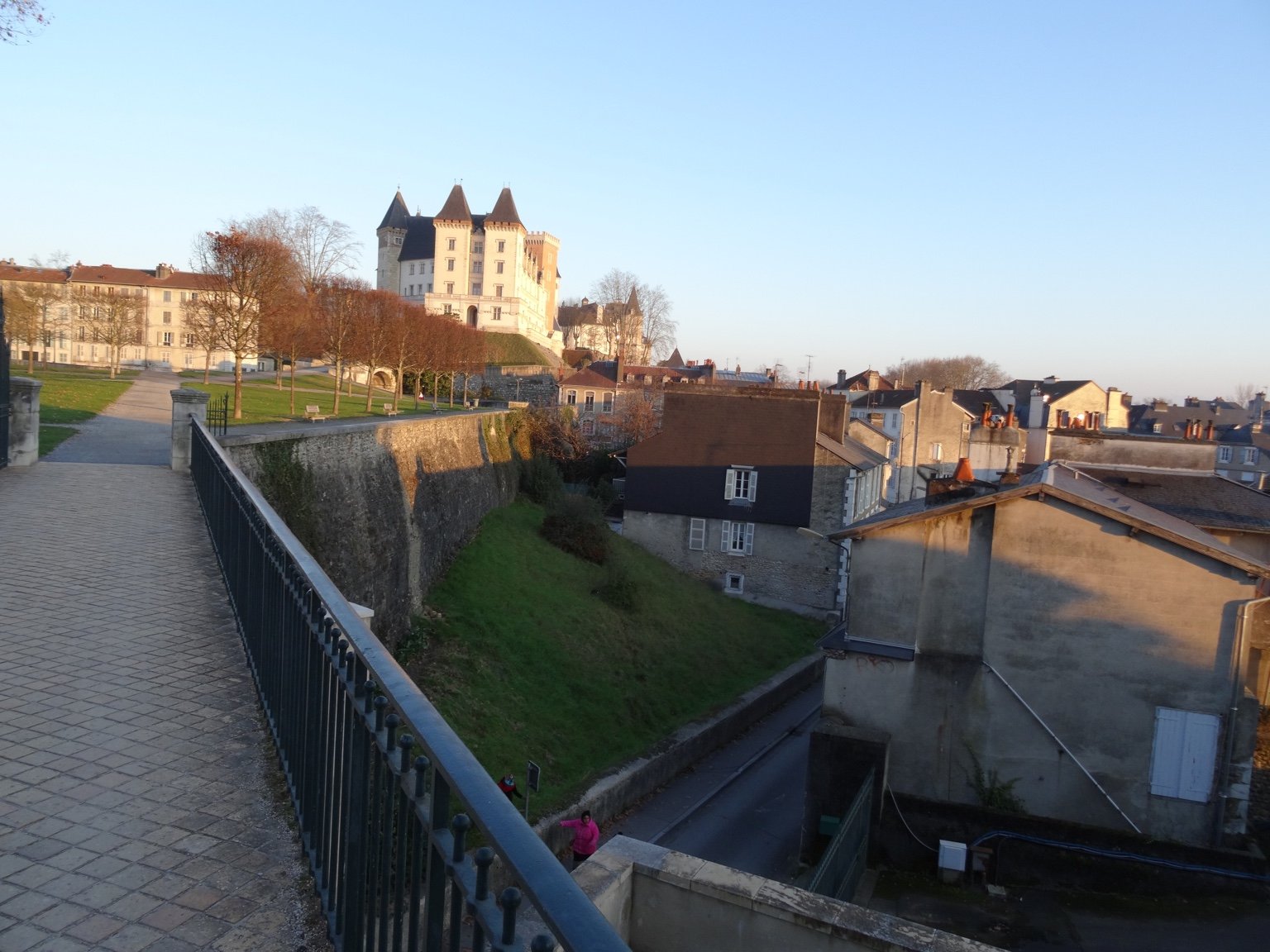 The approach to the Château de Pau.
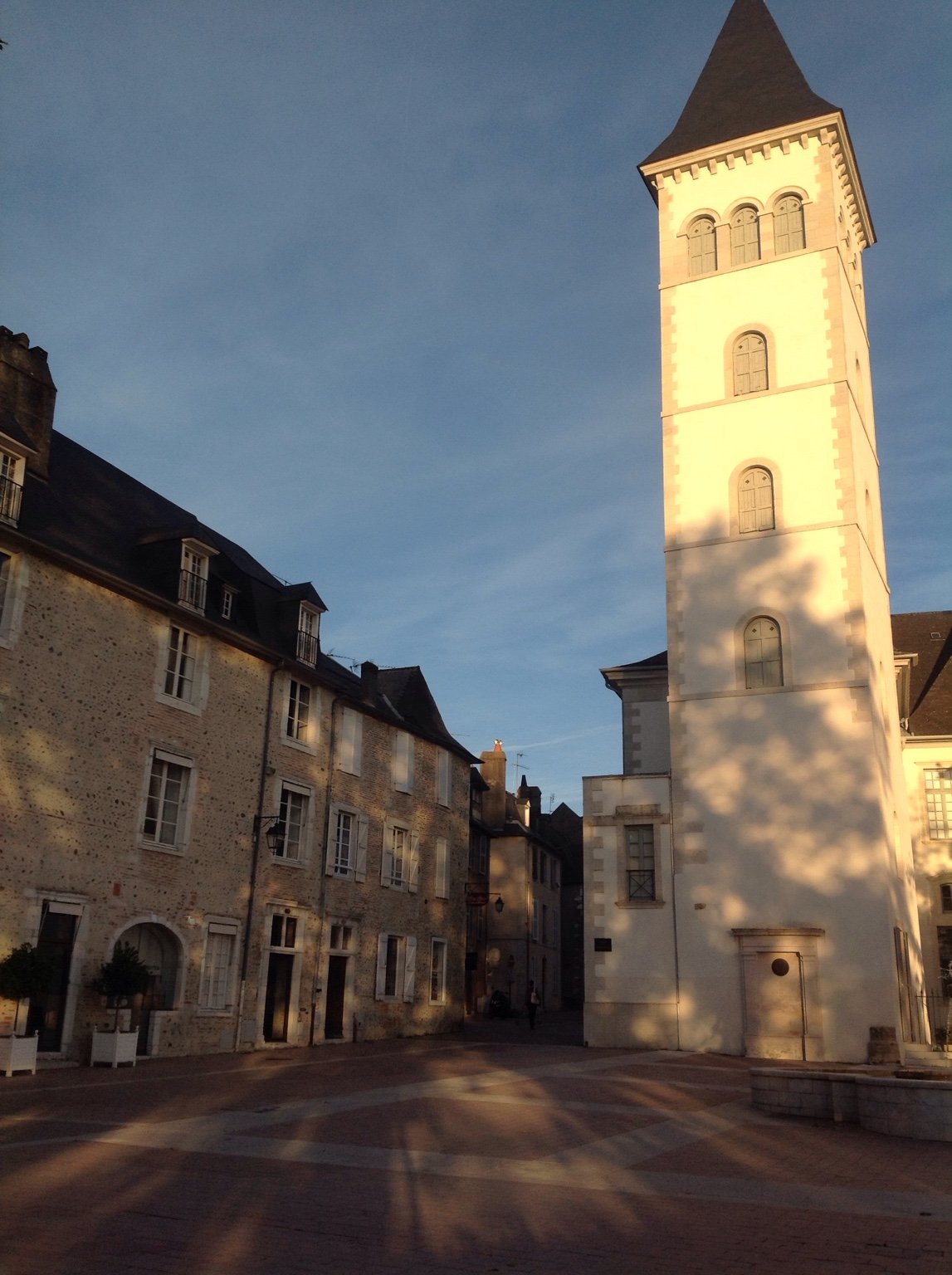 The former Parliament of Navarre beside the château.
2. Winter visitors before the train
British visitors were spending winters in Pau by the 1820s. In 1842, the Scottish doctor Alexander Taylor published a book arguing that the climate could help people with illnesses such as tuberculosis. The town already had visitors. His book gave more people a reason to come.
They brought their pastimes with them. The Pau Golf Club opened in 1856, seven years before the first train arrived. You can still find the course across the river in Billère.
Pau’s resort years · Pau Golf Club
3. A letter from Mary Lincoln
In March 1877, Mary Todd Lincoln wrote to her sister from Pau. Abraham Lincoln’s widow spent part of her later life here, in a town that drew Americans as well as British and other European visitors.
Stand in Place Royale and look at the old Hôtel de France. Then walk towards the château and look up at the former Hôtel Gassion. The hotels and villas help explain how a season in Pau changed the shape of the town.
Huntington Library’s Mary Todd Lincoln collection · The 1877 letter
4. From the Wrights to the race circuit
In 1909 the Wright brothers flew near Pau. The aviation memorial at Lescar is a place to pick up that story. Back in the centre, the Grand Prix and the Tour de France offer two more ways to read the streets. The same bends and slopes that make a walk interesting matter rather more when you are racing.
Aviation memorial at Lescar
The Pau people live in
There’s another walk below the château. The Hédas follows the course of an old stream through the lower town towards Place d’Espagne. Take that route and you see a different side of Pau from the one on the boulevard.
There’s more to explore from here: the markets and traditions of Béarn, and the Pyrenees for walking or skiing. In the city itself, the pleasure is being able to see so much of its history on an ordinary walk.
The Hédas walk